carl?

Fuzzy Nation

John Scalzi

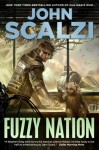
Scalzi’s latest is typical of his work. Fast paced, with well conceived aliens and just a touch of Heinlein’s ultra-competent everyman.
Based on H. Beam Piper’s 1962 book Little Fuzzy, this is an attempt to re-imagine the story in a contemporary context.
The plot concerns a mining surveyor called Jack Holloway who identifies an incredibly rich seam of a rare gemstones and the existence of a group of creatures he calls the ‘little fuzzies’ in the same week.
The gems will make the corporation in charge of the planet gigantically wealthy but the existence of the fuzzies could lead to the shutdown of all mining activity under ecological law – if they can be proved to be sentient.
I enjoyed reading the book, but I couldn’t say that it struck me as being Scalzi’s best. Maybe that’s because Holloway is not terribly likeable character and the ending seems rather inevitable.
I’d recommend it to anyone who likes Scalzi’s stuff and I suspect it’d make a good introduction to science fiction for younger readers.
I’d also like to point out that Piper’s original book Little Fuzzy is available for download at Project Gutenberg for free as it’s in the public domain. It too is a pretty good read.

Rating: B

ralph?

Agent ToThe Stars

John Scalzi

Scalzi’s first novel (written first, published later) is a fun romp set in Hollywood. Drawing on his experiences as a film critic and insider knowledge of the film business to tell the story of a showbiz agent who becomes the representative for visiting aliens.
It’s funny in the same sort of way as The Android’s Dream and at the same time has brilliant, genuinely SFnal, aliens. While being utterly different it kind of reminds me of Pratchett in that it uses humour as a foundation in order to philosophically explore real issues with a light touch.
Totally recommended if you’re looking for a fun, pacy bit of science fiction.
See here for my original review

Rating: A-

unggue?

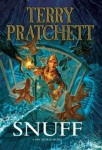
Snuff

Terry Pratchett

The latest Discworld novel finds us once again in the company of Pratchett’s greatest character – Sam Vimes.
Snuff finds Vimes rather reluctantly on holiday with his wife and son at her country estate. Of course, being the true copper that he is, Sam finds himself in the middle of a mystery.
What makes Pratchett great, of course, is his ability to capture the complexities and messiness of being human and part of the greater animal that is society.
His clear eyed humanism is a treasure we should cherish.
Snuff starts slowly and doesn’t spark into life until Vimes relaxes into his inquiry and feels like he’s on familiar ground. The main body of the story is typical Pratchett, beautifully told and utterly involving. However the ending is weirdly muddled, with uneven pacing and too many things left off screen and just related to the reader.
As I always say when reviewing Sir Terry – if you haven’t read his stuff please do; they are more than worth your time.
This isn’t recommended as a place to start, though. Read a few more of the Vimes books, starting with the first perhaps (Guards! Guards!), and you’ll be ready to come back and enjoy this one.

Rating: B+

bandersnatch?

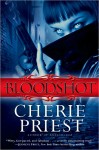
Bloodshot

Cherie Priest

Bloodshot is an urban fantasy novel with a focus on action and humour from an author more famous for her steampunk novels.
Notorious vampire thief, Raylene Pendle, is hired to acquire something out of the ordinary that leads her into the teeth of conspiracy and danger.
While this is an entertaining read and Cherie Priest is a very talented writer, this book never feels like it brings all the elements together in a fully satisfying way. Perhaps the fatal flaw is that the story wraps up in a deeply unsatisfactory and perfunctory matter with a series of short denouements after a muddled set piece.
I can only hope that the sequel actually concludes the story in a more satisfying fashion.
I’d recommend it if you’re looking for a fun urban fantasy romp and not expecting greatness.

Rating: B

willow?

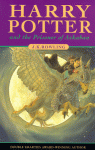
Harry Potter and the Prisoner of Azkaban

J.K. Rowling

The third book in the Harry Potter series achieves the best balance between the central plot, subplots and the overall story arc. It’s also the first book where it really feels like Rowling’s world becomes hers, rather than a tasteful mix of elements from earlier children’s literature.
Finally the paranoia and danger of the wider wizarding world begins to seep through. Things happen that will have real repercussions for the rest of the story arc. The characters start to grow and you can see the will become more than the archetypes the were at the outset of the series.
From here on in the books become less tightly structured and have more flaws but the world and the story arc only become more interesting.

Rating: A-

diary?

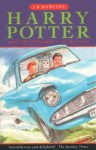
Harry Potter and the Chamber of Secrets

J.K. Rowling

This second book in the series is the weakest of all the Harry Potter books. It’s too similar to it’s predecessor and feels like it’s treading water in terms of the greater story arc.
Don’t get me wrong – it’s still a fun read and has a couple of great sequences. I particularly love the diary of Tom Riddle and whole Polyjuice potion storyline.
I guess it’s the almost videogame structure of the plot that makes it feel more generic and weak in comparison to the later books. It’s all very linear in a ‘solve this puzzle’, ‘play this sports section’, ‘gather these items’ and ‘face the big bad’ way (Lego Harry Potter is one the best games I’ve played in years by the way). Now the flaw of the later, larger books is that there’s too much in the matter of sideplots and digression. Failing to have any of that makes this book seem kind of perfunctory.

Rating: B-

cupboard?

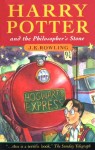
Harry Potter and the Philosopher’s Stone

J.K. Rowling

So I saw the final film installment of the Harry Potter saga the other week and it gave me the impetus to do something I’d been meaning to do for a while; to re-read all the books.
This is in part to experience the world as Rowling wrote it, shorn of the film maker’s interpretations and compromises. The other reason is that I’ve only read the last book once – and a very quick read it was. So there’s a lot of things that I can’t remember and I’m sure there’s a lot of nuance I missed throughout the entire series that I never picked up on.
The first book is a great kids book. It’s not terribly original but very well done with a consistency of tone and world building that would pay dividends as the series grew into a phenomenon.
It’s a quick, fun read within a recognizable tradition of boarding school (magic or otherwise) stories. The greatest pleasure of this re-read is identifying the number of things that are seeded here that come to fruition later in the series. Though it’s hard to tell what’s a deliberate plant – some things gain signifigance in an almost haphazard fashion.
Another enjoyable aspect of the book is getting to know characters again that aren’t terribly well served by the films. Ron and Hermione are richer and more interesting people in the books. In the celluloid version of the series I feel that they were reduced to comic foil and brain respectively.
One thing that I definitely noticed this time through are that there’s a lot of negatives in the depiction of fat people.
I like this book and it’s an enjoyable gateway to a series that is ultimately a very rewarding read.

Rating: B+

went?

Codex

Lev Grossman

I really, really loved The Magicians by Grossman when I read it last year and so when I discovered that my local library had a copy of an earlier book by the author I just had to give it a go.
Codex tells the story of a talented high finance guy who, in the break between jobs, gets involved with the search for a possibly apocryphal text credited to a medieval monk.
The main story/puzzle is well set up and the subplots are intriguing but somehow the book kind of peters out and ends without ever really being satisfying for the reader.
It’s obvious from the book that Grossman is a really talented writer, but that he wasn’t fully formed yet. The Magicians saw him fulfil a large part of that promise.
It’s a pretty capable thriller and depending on your viewpoint you may find the ending less disappointing that I did.

Rating: B

nowhere?

Fire and Hemlock

Diana Wynne Jones
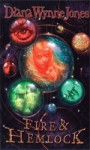
Sadly Diana Wynne Jones died on the 26th March after a long battle against cancer. Always a favourite author of mine, I read as many of the obituaries and memorials as I could find online, it was reassuring to realize that many mourn her passing as much as I do.
I grew up with her Chrestomanci books, especially Witch Week and The Magicians of Caprona, and while I’ve tried to read as many of her books as I can get my hands on – one title that I’d never read kept cropping up in these articles – That’s the book I’m reviewing today.
Fire and Hemlock tells the tale of Polly Whittacker. As the book starts she’s a university student back living at her grandmother’s house during break. As she reads a book of short stories one day she realises that another set of memories has risen in her head. Most of what follows is Polly taking us through her memories, telling tales of becoming an apprentice hero and her friendship with Thomas Lynn. Typically for a Jones character, her family background is complicated, this time it’s a divorce and as she grows older you see the impact of that event and her gradual realization of both her parent’s flaws. It’s masterfully done.
The main plot is a retelling of the old Borderland myth of Tam Lin, there are no elves but there is magic.
The book, as you’d expect, is magnificent. Thrilling, funny and moving. I can see why so many of her fans totally love the book. Fire and Hemlock hasn’t suddenly become my favourite, though it might now be in my top five Jones books.
It’s going to be a sad day when I’ve finally read all of her books – because there’s nothing like reading a Diana Wynne Jones book for the first time. I hesitate to admit this but she’s the only author that’s inspired me to steal a book! It was very difficult to find some of her books before the Harry Potter phenomenon helped bring all her books back in print. Anyway, a copy of one of her Chrestomanci books found it’s way home one day with me after I spied it (I tried very hard to cover my tracks and make it look like it wasn’t simple theft and I doubt anyone noticed).
Please read as much of Diana Wynne Jones as you can – Fire and Hemlock would be a fine starting place.
Below is a list of links to every review I’ve done for a Diana Wynne Jones book while I’ve been keeping this blog:
Hexwood
Witch Week
Archer’s Goon
Charmed Life
The Pinhoe Egg
Conrad’s Fate
Howl’s Moving Castle
The Homeward Bounders
Witch Week
The Magicians of Caprona

Rating: A
tonypandy?

The Daughter of Time

Josephine Tey

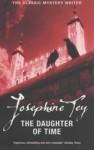
I’ll be perfectly honest – this is not the kind of book I’d read normally. A Fifties police procedural about an upright police detective who investigates a historical mystery? Not my cup of tea!
However I was reading a thread about a book I love – The Dragon Waiting by John M. Ford and lots of people said that if you want some historical context then The Daughter of Time was the most palatable way to get it.
So I picked it up via the wonder that is inter-library loan. Libraries rock.
This brief book was written in 1951 and, given that some of it’s attitudes towards women and anyone who isn’t English are quite appalling, I found it quite entertaining.
The major thrust of the book is that common knowledge or the historical record is frequently a lot of rubbish and doesn’t exactly match what really happened, which he then applies to the story of Richard III. As a result it’s ironic that he accepts establishment interpretations of controversial events as examples of how historical events and the facts don’t always marry up.
If you like a detective story, or historical sleuthing then you might love this book. Personally, as primer to the fall of the Plantagenet dynasty, I found it enlightening.

Rating: B+