attic?

Dave Gorman Vs the Rest of the World

Dave Gorman

What do you do when you get bored and have time to kill? Dave Gorman asked his followers on twitter if they fancied playing a game.
This book chronicles his travels all over the UK to play strangers, acquaintances and friends at various games from Monopoly to Darts with odd pub and board games thrown in.
Gorman has previous when it comes to taking on insane challenges – see Are You Dave Gorman? and Dave Gorman’s Googlewhack Adventure which are both very funny books (I’ve read them but they escaped being reviewed on the blog).
Gorman has a pleasing style and the book is genuinely funny but there’s just something tired and bored underlying the adventures.
Something screams “I want to stop doing crazy stuff and to settle down!”
Recommended if you liked his earlier books.
Rating: B+

syringes?

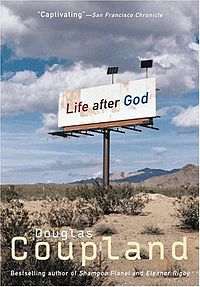
Life After God

Douglas Coupland

This was one of the few remaining Douglas Coupland books that I hadn’t read.
It’s a collection of short stories, each one told in a series of short vignettes.
To be honest these are messy pieces filled with pre-millenial malaise. As such they come across as lazy and self-indulgent.
Coupland’s usual effortless style is the only thing making this collection worthwhile.
Unless you’re a fan of Coupland’s work in general I’d not recommend this particular work at all.

Rating: B-

went?

Codex

Lev Grossman

I really, really loved The Magicians by Grossman when I read it last year and so when I discovered that my local library had a copy of an earlier book by the author I just had to give it a go.
Codex tells the story of a talented high finance guy who, in the break between jobs, gets involved with the search for a possibly apocryphal text credited to a medieval monk.
The main story/puzzle is well set up and the subplots are intriguing but somehow the book kind of peters out and ends without ever really being satisfying for the reader.
It’s obvious from the book that Grossman is a really talented writer, but that he wasn’t fully formed yet. The Magicians saw him fulfil a large part of that promise.
It’s a pretty capable thriller and depending on your viewpoint you may find the ending less disappointing that I did.

Rating: B

nowhere?

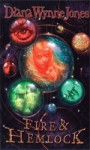
Fire and Hemlock

Diana Wynne Jones

Sadly Diana Wynne Jones died on the 26th March after a long battle against cancer. Always a favourite author of mine, I read as many of the obituaries and memorials as I could find online, it was reassuring to realize that many mourn her passing as much as I do.
I grew up with her Chrestomanci books, especially Witch Week and The Magicians of Caprona, and while I’ve tried to read as many of her books as I can get my hands on – one title that I’d never read kept cropping up in these articles – That’s the book I’m reviewing today.
Fire and Hemlock tells the tale of Polly Whittacker. As the book starts she’s a university student back living at her grandmother’s house during break. As she reads a book of short stories one day she realises that another set of memories has risen in her head. Most of what follows is Polly taking us through her memories, telling tales of becoming an apprentice hero and her friendship with Thomas Lynn. Typically for a Jones character, her family background is complicated, this time it’s a divorce and as she grows older you see the impact of that event and her gradual realization of both her parent’s flaws. It’s masterfully done.
The main plot is a retelling of the old Borderland myth of Tam Lin, there are no elves but there is magic.
The book, as you’d expect, is magnificent. Thrilling, funny and moving. I can see why so many of her fans totally love the book. Fire and Hemlock hasn’t suddenly become my favourite, though it might now be in my top five Jones books.
It’s going to be a sad day when I’ve finally read all of her books – because there’s nothing like reading a Diana Wynne Jones book for the first time. I hesitate to admit this but she’s the only author that’s inspired me to steal a book! It was very difficult to find some of her books before the Harry Potter phenomenon helped bring all her books back in print. Anyway, a copy of one of her Chrestomanci books found it’s way home one day with me after I spied it (I tried very hard to cover my tracks and make it look like it wasn’t simple theft and I doubt anyone noticed).
Please read as much of Diana Wynne Jones as you can – Fire and Hemlock would be a fine starting place.
Below is a list of links to every review I’ve done for a Diana Wynne Jones book while I’ve been keeping this blog:
Hexwood
Witch Week
Archer’s Goon
Charmed Life
The Pinhoe Egg
Conrad’s Fate
Howl’s Moving Castle
The Homeward Bounders
Witch Week
The Magicians of Caprona

Rating: A

tonypandy?

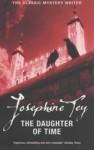
The Daughter of Time

Josephine Tey

I’ll be perfectly honest – this is not the kind of book I’d read normally. A Fifties police procedural about an upright police detective who investigates a historical mystery? Not my cup of tea!
However I was reading a thread about a book I love – The Dragon Waiting by John M. Ford and lots of people said that if you want some historical context then The Daughter of Time was the most palatable way to get it.
So I picked it up via the wonder that is inter-library loan. Libraries rock.
This brief book was written in 1951 and, given that some of it’s attitudes towards women and anyone who isn’t English are quite appalling, I found it quite entertaining.
The major thrust of the book is that common knowledge or the historical record is frequently a lot of rubbish and doesn’t exactly match what really happened, which he then applies to the story of Richard III. As a result it’s ironic that he accepts establishment interpretations of controversial events as examples of how historical events and the facts don’t always marry up.
If you like a detective story, or historical sleuthing then you might love this book. Personally, as primer to the fall of the Plantagenet dynasty, I found it enlightening.

Rating: B+

essay?

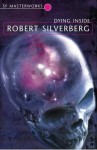
Dying Inside

Robert Silverberg

dying inside by robert silverbergFirst published in 1972 and set in 1976 this is considered one of Robert Silverberg’s great novels.
David Selig is a middle aged New Yorker, barely scraping by on the bottom rung of the ladder, who has telepathic abilities.
As he has aged his power has weakened, become fitful, and he expects that one day it will go away for good.
Selig narrates the story of his everyday life and, with flashbacks, the story of his life and loves.
He’s a self-centred, self pitying creature and at times rather unlikeable.
For someone with perfect insight to other minds he treats people incredibly badly.
I really didn’t get why Silverberg included the essays that Selig ghost writes for college students to make a living and the narrator really annoyed me at times.
However, this novel is a fine character study and a clever take on the idea of ESP. Which is why it has an A rating, the minus reflects the problems I had with the book.
I’m not sure that I can say I wholeheartedly enjoyed Dying Inside, but I do think that it’s an exceptional piece of science fiction – especially considering when it was put out.
I should say that the book is very much of its time. Some bits made me rather uncomfortable, particularly some of the attitudes towards women and blacks.
I’d like to direct you to a much better and rather less amibivalent review of the book by Jo Walton.
My final verdict is that if you love Science Fiction you should probably read this book, but with the caveat that if you can’t stand books with an emphasis on the psychological then you aren’t going to like Dying Inside.

Rating: A-

ambros?

The Emigrants

W.G. Sebald

the emigrantsThe Emigrants tells the stories of four exiled German Jews. These four stories are loosely linked together by an unnamed narrator.
These four tales add up to tell the story of the narrator, another exiled German, obviously based on Sebald himself.
These tales are simply slices of ordinary lives told from the perspective of the narrator, or the narrator interpreting the memories or memoirs of others.
All four stories are haunting and linger in the memory. The writing is beautiful, economic and graceful.
I came to this book by recommendation from the James Yorkston book I read last. It was a recommendation well deserved and I think I will delve further into Sebald’s work.
It seems that there is only a small back catalogue as sadly Sebald was killed in a car accident at age 57.

Rating: A