neitherlands?

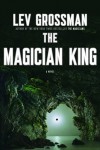
The Magician King

Lev Grossman

The Magician KingThe sequel to The Magicians.
If The Magicians was Grossman’s deconstruction of The Lion, The Witch and The Wardrobe, then this is his Voyage of the Dawn Treader. Of course that doesn’t really do either book justice, and is a real disservice to the quality of what Grossman does here.
He writes an excellent fantasy novel that is somehow simultaneously a love letter to the genre and a critical response to it.
The highlight of this book is Julia’s back story, told in alternate chapters with the main plot.
I’d recommend this without hesitation to anyone who read The Magicians. Everyone else should go read that first book and then move on to this one.
I personally can’t wait til the third book.
Rating: A

2011?

Books read in 2011

Complete chronological list of books I read in 2011, with links to the original reviews

  1. The Book of Basketball by Bill Simmons, rated A
  2. A Princess of Roumania by Paul Park, rated A-
  3. Passage by Connie Willis, rated B+
  4. Among Others by Jo Walton, rated A+
  5. It’s Lovely To Be Here by James Yorkston, rated B
  6. The Emigrants by W.G. Sebald, rated A
  7. The Hell Of It All by Charlie Brooker, rated A-
  8. Dying Inside by Robert Silverberg, rated A-
  9. The Daughter of Time by Josephine Tey, rated B+
  10. Fire and Hemlock by Diana Wynne Jones, rated A
  11. Codex by Lev Grossman, rated B
  12. Harry Potter and the Philosopher’s Stone by J.K. Rowling, rated B+
  13. Harry Potter and the Chamber of Secrets by J.K. Rowling, rated B-
  14. Harry Potter and the Prisoner of Azkaban by J.K. Rowling, rated A-
  15. How To Leave Twitter by Grace Dent, rated B
  16. Bloodshot by Cherie Priest, rated B
  17. Coffee At Luke’s edited by Jennifer Crusie, rated C-
  18. Snuff by Terry Pratchett, rated B+
  19. Agent To The Stars by John Scalzi, rated A-
  20. Fuzzy Nation by John Scalzi, rated B

carl?

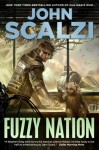
Fuzzy Nation

John Scalzi

Scalzi’s latest is typical of his work. Fast paced, with well conceived aliens and just a touch of Heinlein’s ultra-competent everyman.
Based on H. Beam Piper’s 1962 book Little Fuzzy, this is an attempt to re-imagine the story in a contemporary context.
The plot concerns a mining surveyor called Jack Holloway who identifies an incredibly rich seam of a rare gemstones and the existence of a group of creatures he calls the ‘little fuzzies’ in the same week.
The gems will make the corporation in charge of the planet gigantically wealthy but the existence of the fuzzies could lead to the shutdown of all mining activity under ecological law – if they can be proved to be sentient.
I enjoyed reading the book, but I couldn’t say that it struck me as being Scalzi’s best. Maybe that’s because Holloway is not terribly likeable character and the ending seems rather inevitable.
I’d recommend it to anyone who likes Scalzi’s stuff and I suspect it’d make a good introduction to science fiction for younger readers.
I’d also like to point out that Piper’s original book Little Fuzzy is available for download at Project Gutenberg for free as it’s in the public domain. It too is a pretty good read.

Rating: B

ralph?

Agent ToThe Stars

John Scalzi

Scalzi’s first novel (written first, published later) is a fun romp set in Hollywood. Drawing on his experiences as a film critic and insider knowledge of the film business to tell the story of a showbiz agent who becomes the representative for visiting aliens.
It’s funny in the same sort of way as The Android’s Dream and at the same time has brilliant, genuinely SFnal, aliens. While being utterly different it kind of reminds me of Pratchett in that it uses humour as a foundation in order to philosophically explore real issues with a light touch.
Totally recommended if you’re looking for a fun, pacy bit of science fiction.
See here for my original review

Rating: A-

unggue?

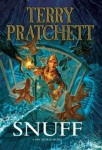
Snuff

Terry Pratchett

The latest Discworld novel finds us once again in the company of Pratchett’s greatest character – Sam Vimes.
Snuff finds Vimes rather reluctantly on holiday with his wife and son at her country estate. Of course, being the true copper that he is, Sam finds himself in the middle of a mystery.
What makes Pratchett great, of course, is his ability to capture the complexities and messiness of being human and part of the greater animal that is society.
His clear eyed humanism is a treasure we should cherish.
Snuff starts slowly and doesn’t spark into life until Vimes relaxes into his inquiry and feels like he’s on familiar ground. The main body of the story is typical Pratchett, beautifully told and utterly involving. However the ending is weirdly muddled, with uneven pacing and too many things left off screen and just related to the reader.
As I always say when reviewing Sir Terry – if you haven’t read his stuff please do; they are more than worth your time.
This isn’t recommended as a place to start, though. Read a few more of the Vimes books, starting with the first perhaps (Guards! Guards!), and you’ll be ready to come back and enjoy this one.

Rating: B+

bandersnatch?

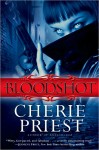
Bloodshot

Cherie Priest

Bloodshot is an urban fantasy novel with a focus on action and humour from an author more famous for her steampunk novels.
Notorious vampire thief, Raylene Pendle, is hired to acquire something out of the ordinary that leads her into the teeth of conspiracy and danger.
While this is an entertaining read and Cherie Priest is a very talented writer, this book never feels like it brings all the elements together in a fully satisfying way. Perhaps the fatal flaw is that the story wraps up in a deeply unsatisfactory and perfunctory matter with a series of short denouements after a muddled set piece.
I can only hope that the sequel actually concludes the story in a more satisfying fashion.
I’d recommend it if you’re looking for a fun urban fantasy romp and not expecting greatness.

Rating: B

grent?

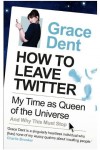
How To Leave Twitter

Grace Dent

Grace Dent is a columnist for the Guardian. She took over from Charlie Brooker as one of their TV critics. She’s a very funny person and also happens to be utterly addicted to Twitter.
This book is a light hearted look at the whole twitter phenomenon and user experience.
There’s not much to say about it other than Dent really does know what she’s talking about here. However to be honest, unless you’re in the market for a mildly funny book about twitter and happen to like Grace Dent’s style, there’s not much about this book that’s going to appeal to you.

Rating: B

willow?

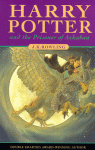
Harry Potter and the Prisoner of Azkaban

J.K. Rowling

The third book in the Harry Potter series achieves the best balance between the central plot, subplots and the overall story arc. It’s also the first book where it really feels like Rowling’s world becomes hers, rather than a tasteful mix of elements from earlier children’s literature.
Finally the paranoia and danger of the wider wizarding world begins to seep through. Things happen that will have real repercussions for the rest of the story arc. The characters start to grow and you can see the will become more than the archetypes the were at the outset of the series.
From here on in the books become less tightly structured and have more flaws but the world and the story arc only become more interesting.

Rating: A-

diary?

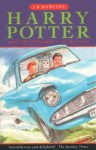
Harry Potter and the Chamber of Secrets

J.K. Rowling

This second book in the series is the weakest of all the Harry Potter books. It’s too similar to it’s predecessor and feels like it’s treading water in terms of the greater story arc.
Don’t get me wrong – it’s still a fun read and has a couple of great sequences. I particularly love the diary of Tom Riddle and whole Polyjuice potion storyline.
I guess it’s the almost videogame structure of the plot that makes it feel more generic and weak in comparison to the later books. It’s all very linear in a ‘solve this puzzle’, ‘play this sports section’, ‘gather these items’ and ‘face the big bad’ way (Lego Harry Potter is one the best games I’ve played in years by the way). Now the flaw of the later, larger books is that there’s too much in the matter of sideplots and digression. Failing to have any of that makes this book seem kind of perfunctory.

Rating: B-

cupboard?

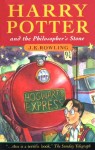
Harry Potter and the Philosopher’s Stone

J.K. Rowling

So I saw the final film installment of the Harry Potter saga the other week and it gave me the impetus to do something I’d been meaning to do for a while; to re-read all the books.
This is in part to experience the world as Rowling wrote it, shorn of the film maker’s interpretations and compromises. The other reason is that I’ve only read the last book once – and a very quick read it was. So there’s a lot of things that I can’t remember and I’m sure there’s a lot of nuance I missed throughout the entire series that I never picked up on.
The first book is a great kids book. It’s not terribly original but very well done with a consistency of tone and world building that would pay dividends as the series grew into a phenomenon.
It’s a quick, fun read within a recognizable tradition of boarding school (magic or otherwise) stories. The greatest pleasure of this re-read is identifying the number of things that are seeded here that come to fruition later in the series. Though it’s hard to tell what’s a deliberate plant – some things gain signifigance in an almost haphazard fashion.
Another enjoyable aspect of the book is getting to know characters again that aren’t terribly well served by the films. Ron and Hermione are richer and more interesting people in the books. In the celluloid version of the series I feel that they were reduced to comic foil and brain respectively.
One thing that I definitely noticed this time through are that there’s a lot of negatives in the depiction of fat people.
I like this book and it’s an enjoyable gateway to a series that is ultimately a very rewarding read.

Rating: B+